
The Future of Digital Marketing in 2026: Trends Every Business Must Know
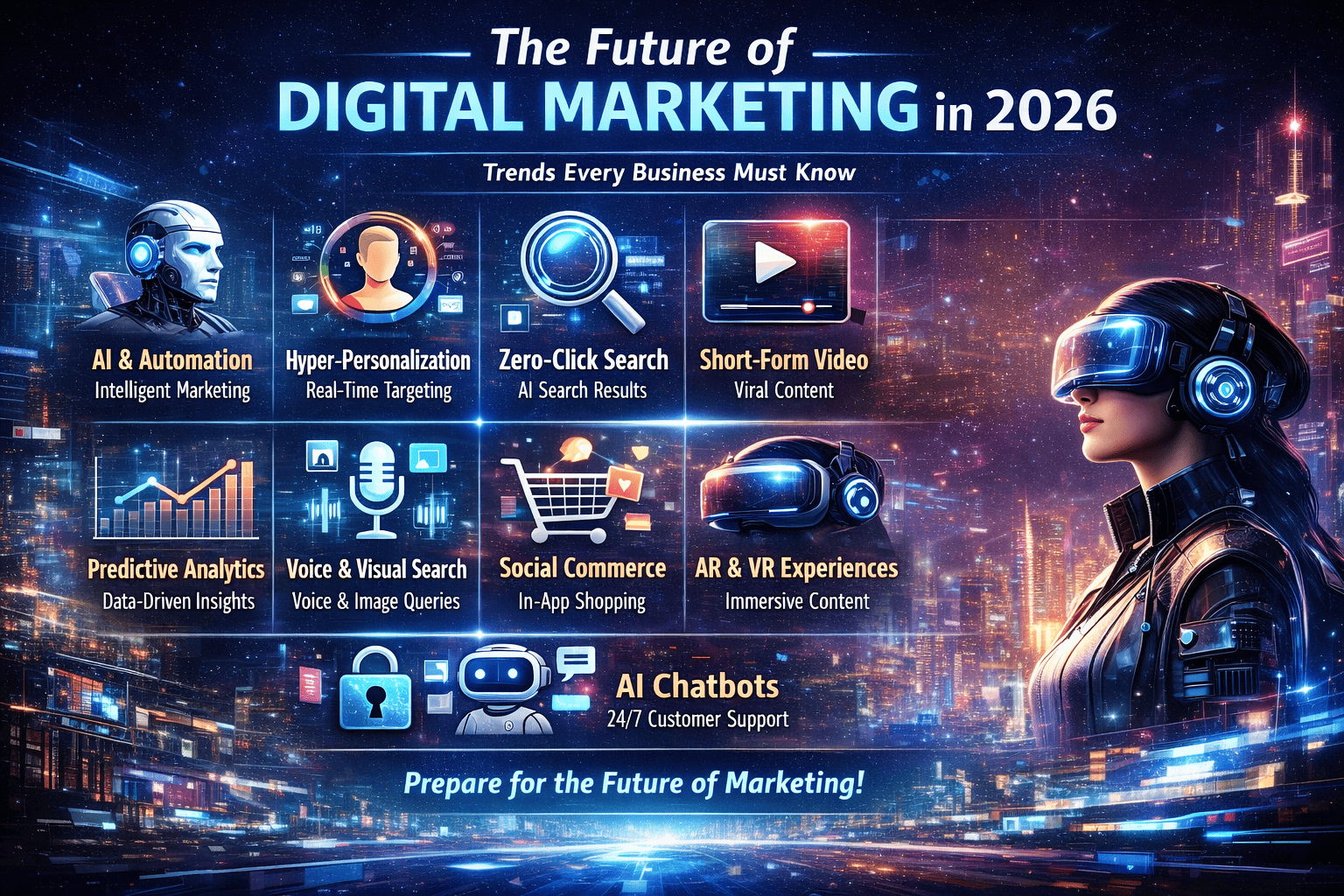
Digital marketing is evolving faster than ever, and 2026 is shaping up to be a transformative year for businesses worldwide. With rapid advancements in technology, changing consumer behavior, and new digital platforms emerging, businesses must adapt their marketing strategies to stay competitive. Understanding the future trends of digital marketing will help brands build stronger customer relationships, increase visibility, and drive sustainable growth.
1. Artificial Intelligence and Automation Will Dominate Marketing
Artificial Intelligence (AI) is no longer a futuristic concept—it is already a core part of digital marketing. In 2026, AI will play an even bigger role in automating campaigns, analyzing customer data, and personalizing marketing experiences. AI-powered tools can predict customer behavior, optimize ad targeting, and generate content.
Chatbots, virtual assistants, and automated email marketing systems will become more intelligent and human-like, providing instant responses and personalized interactions. Businesses that use AI-driven automation will save time, reduce costs, and improve marketing efficiency.
2. Hyper-Personalization Will Become the Standard
Consumers today expect personalized experiences, and in 2026, generic marketing messages will no longer work. Hyper-personalization uses data, AI, and machine learning to deliver highly customized content, ads, and offers based on individual preferences and behavior.
Brands will use real-time data to tailor websites, emails, social media ads, and product recommendations. This level of personalization will increase engagement, customer satisfaction, and conversion rates. Businesses that fail to personalize their marketing may lose customers to competitors who do.
3. Voice Search and Conversational Marketing Will Grow
With the increasing use of smart devices like Google Assistant, Alexa, and Siri, voice search is becoming a major digital marketing trend. By 2026, a significant portion of online searches will be voice-based.
Businesses must optimize their content for conversational keywords and natural language queries. Voice search optimization will focus on local SEO, question-based content, and featured snippets. Additionally, conversational marketing through chatbots and messaging apps will become more popular, allowing brands to interact with customers in real time.
4. Video Marketing Will Continue to Dominate
Video content is one of the most powerful digital marketing tools, and its importance will continue to grow in 2026. Short-form videos, live streaming, interactive videos, and shoppable videos will dominate social media platforms.
Platforms like YouTube, Instagram Reels, TikTok, and LinkedIn video will be essential for brand promotion. Businesses will use video storytelling to connect emotionally with audiences, explain products, and showcase brand values. Video marketing will drive higher engagement and conversions compared to text-based content.
5. Influencer and Creator Marketing Will Evolve
Influencer marketing will continue to be a major trend, but in 2026, the focus will shift toward micro-influencers and authentic creators. Consumers trust real people more than traditional advertisements, so brands will collaborate with niche influencers who have genuine engagement.
User-generated content (UGC) and creator-led campaigns will become more effective in building trust and brand credibility. Businesses will also invest in long-term partnerships with influencers rather than one-time promotions.
6. Privacy-First Marketing and Data Regulations
Data privacy will be a key concern in the future of digital marketing. With stricter regulations and increasing consumer awareness, businesses must adopt privacy-first marketing strategies. Third-party cookies are declining, and brands will rely more on first-party data.
Transparent data collection, consent-based marketing, and ethical data practices will be essential. Businesses that respect user privacy and build trust will gain a competitive advantage.
7. Social Commerce and Online Shopping Integration
Social media platforms are becoming powerful e-commerce channels. In 2026, social commerce will continue to grow, allowing users to shop directly from social media apps. Features like Instagram Shopping, Facebook Marketplace, and TikTok Shop will become more advanced.
Businesses will integrate seamless shopping experiences into social platforms, reducing the steps between discovery and purchase. This trend will benefit brands that focus on visual content and social media engagement.
8. Augmented Reality (AR) and Virtual Reality (VR) Experiences
AR and VR technologies will transform digital marketing by providing immersive experiences. Customers will be able to try products virtually, explore virtual stores, and experience interactive brand campaigns.
For example, fashion and beauty brands can offer virtual try-ons, while real estate and travel companies can provide virtual tours. These technologies will enhance customer experience and reduce purchase hesitation.
9. Sustainable and Purpose-Driven Marketing
Consumers are becoming more conscious of sustainability and social responsibility. In 2026, brands will need to focus on purpose-driven marketing, highlighting their values, ethics, and social impact.
Businesses that promote eco-friendly practices, community initiatives, and ethical values will attract loyal customers. Authentic storytelling and transparency will be key to building trust.
10. Omnichannel Marketing Will Be Essential
Customers interact with brands across multiple platforms, including websites, social media, email, apps, and offline channels. In 2026, omnichannel marketing will be crucial to provide a consistent and seamless customer experience.
Businesses will integrate all marketing channels to ensure customers receive the same message and experience across platforms. Data integration and customer journey mapping will help brands understand and engage customers effectively.
Conclusion
The future of digital marketing in 2026 will be driven by technology, personalization, privacy, and customer-centric strategies. AI, automation, voice search, video marketing, influencer marketing, and immersive technologies will shape the digital marketing landscape. Businesses must adapt to these trends to stay competitive and meet evolving customer expectations.
By embracing innovation, focusing on personalized experiences, and building trust with customers, businesses can achieve long-term success in the digital world. The key is to stay updated with emerging trends and continuously evolve marketing strategies to match the dynamic digital environment.